A storm rolling in at midnight or a heatwave that turns your luxury tent into a sauna can undo the whole appeal of glamping. The difference between a cozy night and a miserable one usually comes down to how well glamping sites handle weather — and how much you know about that before you pay. A canvas tent that feels magical in dry June conditions is a very different proposition in a windstorm or a cold snap.
This guide walks you through what well-run sites actually do to prepare for every season, from the structures they build to the plans they follow when forecasts turn ugly. You’ll also get the exact questions to ask about your unit and the cancellation policy, advice on picking the right season and region, packing tips for temperature swings, and red flags that tell you a site isn’t weather-ready. Ask the right questions up front, and you can book with confidence in almost any forecast.
How Glamping Sites Handle Weather in Every Season
Good glamping operators think about weather long before you arrive, and it starts with the structures themselves. Classic canvas safari tents work beautifully in dry summer months, when warm days and cool nights need little more than airflow and a blanket. But when temperatures drop or rain settles in, quality sites switch to insulated domes and yurts equipped with wood stoves or mini-split systems that provide genuine heating and cooling — not just a decorative blanket pile.
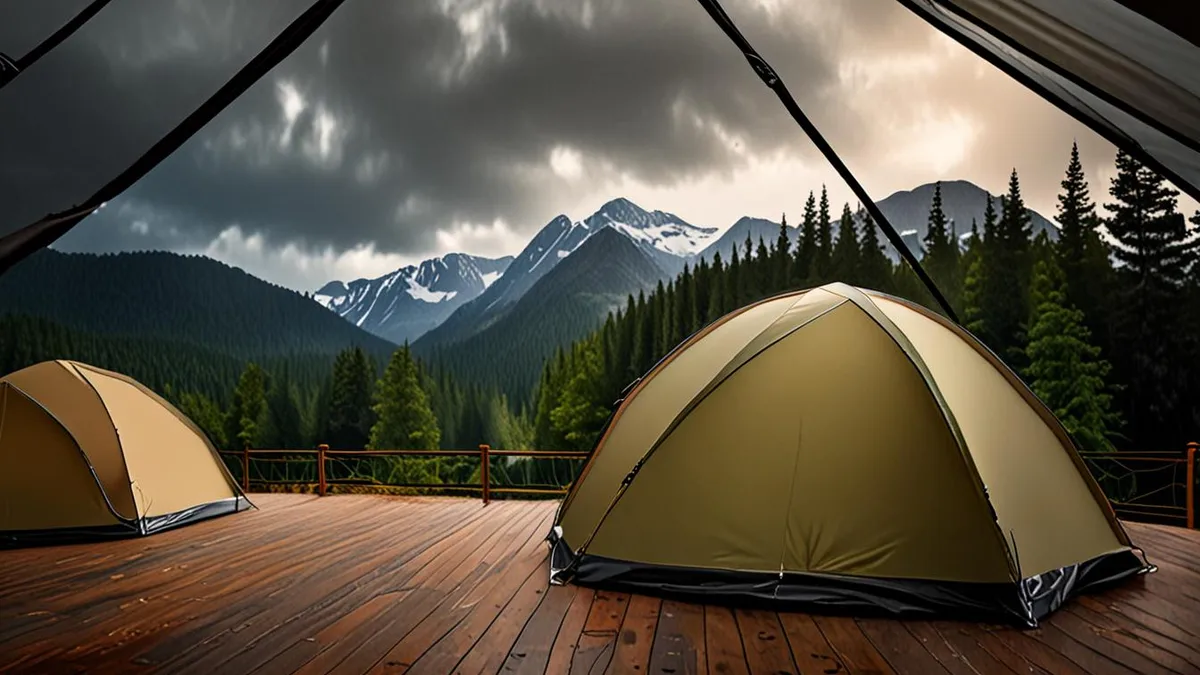
The best sites also engineer their grounds around the weather. Units sit on raised platforms to keep them clear of pooling water after heavy rain, and operators position windbreaks or plant natural shelter around exposed sites. Guy lines and anchoring systems on quality tents and domes are typically rated for winds of 40-50 mph, which covers most of the gusts a storm throws at a site. Covered walkways between units and shared spaces mean guests can reach the restroom or the lodge without wading through a downpour.
What happens behind the scenes
Operational planning matters just as much as hardware. Well-run sites monitor forecasts before every arrival and reach out proactively when something serious is coming. After storms pass, staff walk the property to check guy lines, clear debris and inspect each unit before guests settle in. And when a forecast turns truly severe, many operators will move guests between unit types — say, from a canvas tent into a sturdier yurt or cabin — so the stay goes ahead safely. Knowing these measures exist is exactly why it pays to ask about them before you book.
Questions to Ask About Your Unit Before Booking
The unit itself is where weather comfort is won or lost, so your booking questions should get specific. Start with heating and cooling: a “heated tent” can mean anything from a mini-split system to a small space heater that cuts out at midnight. Ask what equipment is actually installed, whether it runs all night, and whether it’s included in the rate or billed as an extra fee. Sites that are proud of their setup will answer in detail; vague answers are an answer too.
Structure matters just as much. A fully enclosed, insulated dome behaves completely differently in a storm than open canvas with mesh screens, and both are sold as “glamping” online. It’s also worth asking about the site’s track record — a structure that has already survived several seasons of storms at that exact location tells you more than any specification sheet. If you’re still weighing these factors against price and location, how to choose a glamping site for your first luxury stay breaks the decision down step by step.
- Wind and rain ratings: ask for the actual rating of the structure — most well-built tents and domes are engineered to handle winds of 40-50 mph — and whether it has been through major storms at this site before.
- Covered outdoor space: a covered deck, porch or awning means rain doesn’t trap you inside the unit all day, which matters enormously on a wet afternoon.
- Insulation details: ask whether walls are single-layer canvas or insulated panels, and how the floor is built, since cold rises straight through an uninsulated platform.
- Power and lighting: confirm whether lights and heating run on grid power, solar or batteries, and what happens if a storm knocks the supply out overnight.
Questions About Cancellation and Weather Policies
Even the sturdiest unit can’t help you if a storm forces you to cancel, so the policy questions deserve as much attention as the structure questions. Start with the basic outcome: if severe weather hits, do you get a refund, a rebooking credit, or nothing at all? Be prepared for the answer to be a credit — full refunds for weather cancellations are far less common than rebooking credits, and many sites offer the credit as their standard gesture of goodwill rather than a guarantee.
Get the details in writing
The fine print lives in two places. First, the notice window: many sites require 7-14 days notice for free rescheduling due to severe weather, which means a forecast that turns bad three days out may leave you with limited options. Second, the definition: ask exactly what counts as “severe weather” in their policy. A named storm is usually clear; a week of steady rain may not qualify at all. Get the terms in an email so there’s no ambiguity later.
Finally, ask about flexibility on-site rather than on paper. Some operators will move you to a sturdier unit type at no extra cost if the forecast worsens before or during your stay — a far better outcome than a cancellation. Pair these policy questions with smart timing: choosing the right season matters too, and picking the right time of year for your park region can help you avoid the worst weather windows in the first place.
Choosing the Right Season and Region for Stable Weather
The single biggest factor in your glamping comfort is not the tent itself — it is when and where you book. In most US national park regions, the peak season runs from May through October, and for good reason. These months bring the driest, most predictable conditions, with warm days, cool nights and far less chance of a storm interrupting your stay.
If you want lower prices and fewer crowds, the shoulder months of April-May and September-October can work well. Just go in with realistic expectations: these periods typically bring more rain, and temperature swings of 20-30°F between day and night are common. A day that feels mild at noon can drop close to freezing after dark, so you will spend more time layering up than you would at midsummer.
Winter is a different game entirely. Standard canvas tents are simply not built for snow, sustained freezing temperatures or days of steady rain, so a cold-season booking should only ever be in a heated structure. That means a cabin, a yurt or an insulated dome with a wood stove or mini-split system — and you should confirm the heating setup directly before paying.
- In peak season, book 2-3 months ahead to get first pick of the most weather-resilient unit types, since the sturdiest domes and yurts tend to sell out first.
- In desert regions like the Southwest, aim for the edges of peak season — late spring or early fall — because midsummer heat can be just as disruptive as storms.
- In mountain regions, ask specifically when the site’s access roads are typically snow-free, since a heated dome is no use if the road up to it is still buried.
- Check sunrise and sunset times for your dates: short winter days mean you will spend more evening hours inside, which makes the unit’s interior comfort matter far more.
Packing and Preparing for Weather Swings
Even a well-built glamping unit cannot smooth out every temperature swing, so what you pack matters. In shoulder seasons especially, expect 20-30°F drops between afternoon and bedtime. The fix is layers: a base layer, a warm mid-layer like fleece, and a waterproof shell on top. Bring that shell even in dry season — a surprise overnight shower is one of the most common glamping inconveniences, and it is easy to avoid.
Storms also change how you spend your evenings. When rain keeps you inside a tent or dome after dark, you will be glad you brought a headlamp rather than relying on your phone’s flashlight, along with offline maps in case cell service is patchy. Download movies, podcasts or books before you arrive so a stormy night feels cozy instead of boring.
One step travelers often skip is checking how you actually get to the site. Some remote glamping locations sit at the end of unpaved roads that turn into mud or become snowed in after heavy weather. Ask the operator directly whether their access road is passable in rain, and whether a regular car can make the drive or you will need higher clearance. For a full checklist that covers every season, see what to pack for a glamping trip in any season.
- Pack a pair of waterproof shoes or boots in addition to your daytime footwear, since walking between your unit and the bathroom in wet grass is a daily reality at many sites.
- Bring a small power bank — charging outlets are not always inside the unit, and storms can knock out site power temporarily.
- Toss in hand warmers and an extra blanket for shoulder-season nights, when the provided bedding may not be enough for the low end of the temperature swing.
- If the site allows it, bring fire starters or matches so you can use a fire pit or wood stove without depending on staff to light it for you.
Red Flags That a Site Is Not Weather-Ready
Most glamping operators are honest and well-prepared, but a handful are not — and a storm is the wrong time to find out. The good news is that weather-unready sites almost always show warning signs before you pay. You just need to know where to look: in the listing itself, in the answers you get to direct questions, and in the reviews from past guests.
Start with the listing. If a site advertises cold-season dates but never mentions heating, cooling or insulation anywhere in the description, that silence is telling. A quality operator selling winter stays will proudly describe wood stoves, mini-splits or insulated walls. If the photos show open canvas with mesh screens and the calendar is open in December, assume the unit is a fair-weather structure and keep looking.
Next, test the operator’s communication. Ask plainly what happens if a storm hits during your stay. A weather-ready site will answer with specifics — a rebooking credit, a notice window, a policy on moving you to a sturdier unit. Vague replies, or no reply at all, tell you everything you need to know about how you will be treated when conditions turn bad.
- Look closely at where the units sit: a tent pitched on low-lying ground with no raised platform is a flood risk in heavy rain, even if the listing looks picturesque.
- Search reviews for the words “leak,” “collapsed” or “wind” — a single mention may be bad luck, but a pattern means the structures are not holding up.
- Check whether reviews mention staff responding after storms; a site with no mention of post-storm checks likely has no operational plan for them.
- Be wary of listings that show only sunny photos and never a single shot of the unit in rain, snow or wind — established sites usually document all conditions.
Booking With Confidence in Any Forecast
A storm or heatwave can turn a luxury tent stay into a miserable night, but it does not have to. Weather-ready sites combine sturdy structures, clear policies and honest answers to your questions, and you can find them with a few direct conversations before you pay.
Asking about heating, wind ratings and cancellation terms before booking removes most weather risk, and matching the season and unit type to the region’s climate is the final step to a comfortable stay. Do that, and even a rainy forecast becomes a minor detail rather than a ruined trip. If this helped you plan your next stay, leave a comment or share this article with a fellow traveler.