Booking a luxury glamping dome for the first time comes with a nagging question: will this actually feel luxurious, or is it just a tent with a bed inside? Listings can be vague, photos can be flattering, and nobody wants to drive hours down a gravel road only to discover the “bathroom” is a shared shed. The difference between a true luxury dome and a basic canvas setup is real, and it matters for how you plan, pack and budget.
This article sets honest expectations for a dome stay. We’ll explain what a luxury glamping dome actually is, what amenities to look for inside, what you can expect to pay per night, and when to book for the best rates and availability. We’ll also cover how to choose the right dome for your destination, what to pack, and a few final takeaways before you reserve. By the end, you’ll know exactly what you’re paying for and whether a dome stay fits your trip.
What Is a Luxury Glamping Dome?
A luxury glamping dome is a geodesic dome built as a semi-permanent structure, not a tent pitched for the weekend. The triangular panel design is inherently strong, and quality domes sit on insulated platforms with real framing, insulation layers and weatherproof covers that handle rain, wind and temperature swings far better than any canvas. Many have hard entry doors, proper windows and a lockable entrance, so they behave more like a small cabin than a campsite.
Inside, the experience is closer to a boutique hotel room than a campsite. Common features include real beds with proper mattresses, heating or air conditioning, electricity and outlets, Wi-Fi, a private bathroom and, in many units, a kitchenette. You’re not hauling a cooler to a communal bathhouse or zipping two tent flaps shut at night.
How Big Are These Domes?
Sizes typically range from about 16 to 30 feet in diameter. That’s enough floor space for a large bed, a small lounge area and storage without feeling cramped. Most luxury domes sleep 2 to 4 guests, with family units up to 6, so couples get a cozy setup while small families can share one structure. If you’re traveling with more people, some properties place several domes on the same property, which works well for groups who want togetherness without sharing a bathroom.
Inside the Dome: Amenities and Comfort Levels
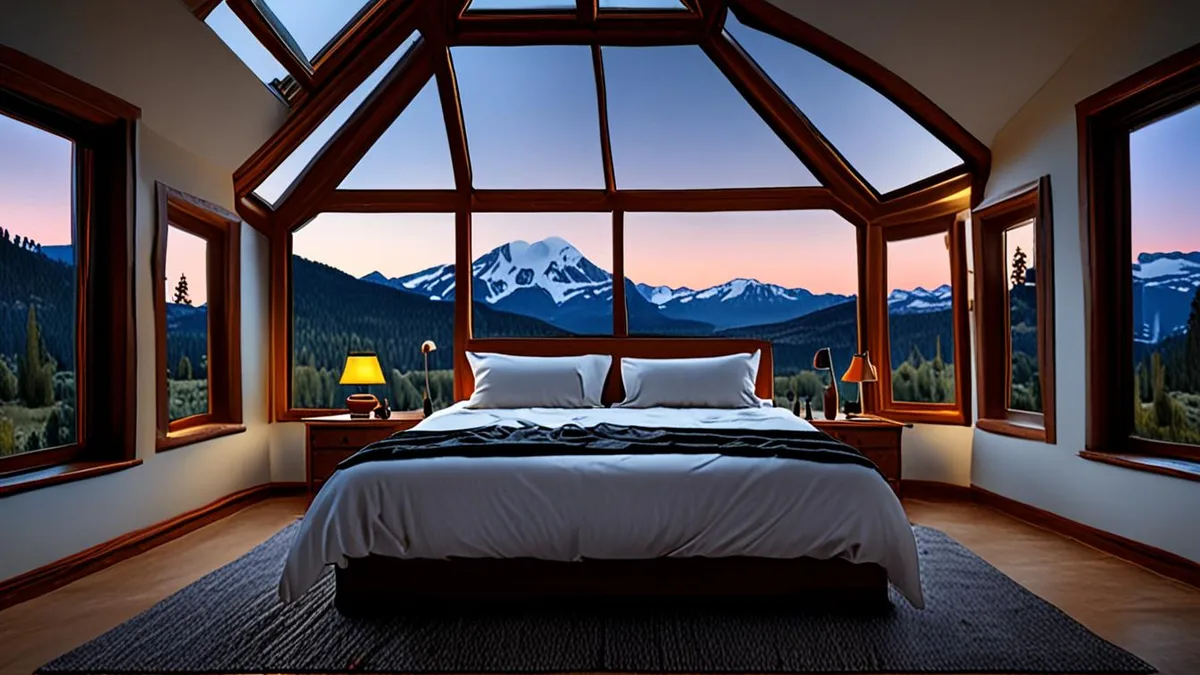
Most luxury domes follow a similar layout: a king or queen bed sits center stage, often positioned so you can see out the window from the pillows. Around it you’ll usually find a small lounge area with a sofa or chairs, a skylight or panoramic window framing the view, and a private en-suite bathroom with a real toilet, sink and shower. Lighting is typically warm and adjustable, which makes evenings feel more like a cabin than a campsite.
Beyond the basics, extras vary a lot from property to property, and they’re often what justify a higher rate. A wood stove changes the whole feel of a cold evening, and a private hot tub under the stars is a genuine luxury rather than a shared spa. Before booking, make a list of which extras actually matter to you and check that they’re included rather than available on request.
- Wood stoves — usually paired with a supply of firewood, but confirm whether refills cost extra if you’re staying several nights in cold weather.
- Private hot tubs — often placed on the deck beside the dome, so check whether it’s heated and ready on arrival or needs hours to warm up.
- Outdoor fire pits and BBQ grills — some properties provide firewood and basic grill tools; others expect you to bring your own.
- Stargazing decks — look for loungers or hammocks rather than bare decking, especially if dark skies are the main reason you booked.
If you plan to self-cater, ask specifically what the kitchenette includes. Some units have a full fridge, microwave, cookware and dishes, while others offer only a mini fridge and a kettle. Timing matters too — the best windows for scenery and comfort vary by region, and our guide to the best seasons for glamping in US national park regions breaks down when each area shines.
What a Luxury Glamping Dome Costs Per Night
Most luxury glamping domes run $150 to $400 per night, with peak-season premium domes reaching $500. That places them well above a basic campsite but often below a resort hotel room, especially in rural areas where hotel options are limited. For that price you’re paying for the structure itself, the private bathroom and the view, not just a place to sleep.
What Pushes the Rate Up
Three factors reliably drive prices higher: a private hot tub, a panoramic view and proximity to a national park. A dome overlooking a canyon or lake commands a premium over one facing the treeline, and properties within a short drive of popular parks fill fastest and price accordingly. Extras like wood stoves and stargazing decks also factor in, though usually less dramatically than the view.
Watch the Minimum Stay
Here’s the detail that surprises first-time bookers: minimum stays of 2 nights are common on weekends and holidays. A “$250 per night” dome is really a $500 weekend once the minimum applies, before cleaning fees and taxes. If your schedule is flexible, a midweek one-night stay can sometimes sidestep the requirement entirely, though policies vary by property.
For a deeper breakdown of where your money goes, see our guide to how much glamping costs and what drives the price. And always check the total price at checkout rather than the nightly rate — cleaning fees, service fees and local taxes can add a meaningful chunk to a two-night booking.
When to Book and When to Go
Most luxury dome destinations in the US see their peak season run from May through October, when the weather cooperates and the stargazing is best. That window fills up fast, especially for domes with hot tubs or sweeping views, so timing matters more than it might for a regular hotel stay. Popular weekend dates in scenic areas can be gone well before the season even starts, and the most photographed domes tend to disappear first from booking calendars.
For summer and fall weekends, plan to reserve 2 to 4 months ahead. If you’re aiming for a dome near a national park, start looking about 6 months out, since those properties book up earliest and often have the strictest cancellation policies. Keep in mind that many operators require a 2-night minimum on weekends and holidays, which narrows your options if you can only get away for a single night.
If your schedule is flexible, aim for the shoulder months. May and late September typically offer lower rates and thinner crowds, and you still get long evenings outside. Early October can be similar in milder regions, though nights cool down quickly, so confirm heating before you commit.
How to Choose the Right Dome for Your Trip
The setting shapes the whole experience, so start there. A dome in the mountains gives you cool nights and forest views, a coastal dome trades that for ocean air and salt-stained sunsets, and a desert dome usually delivers the darkest skies and the widest horizons. Pick the one that matches what you actually want from the trip, not just the best-looking photo.
Check the Season Fit
Once you’ve settled on a location, confirm the dome has heating or air conditioning for the season you’re traveling. Not every property runs year-round, and some domes close entirely in winter when temperatures drop. A dome marketed as four-season should mention insulation and a real heating source, such as a wood stove or mini-split system. If the listing is vague about climate control, ask before you book.
Read the Reviews Carefully
Recent guest reviews tell you what the photos don’t. Look for comments on privacy, since some domes sit close to the owner’s house or to neighboring units. Check what people say about road access too, because a rough gravel track can be a real issue after rain or in a low-clearance car. And pay attention to whether guests describe the bathroom as truly private and en-suite, or mention a shared facility a short walk away. If you want a fuller framework for comparing properties, our guide on how to pick a glamping site for your first luxury stay walks through the decision step by step.
What to Pack for a Dome Stay
Even at the luxury end, a dome stay is still a rural property stay, and packing accordingly makes a big difference. You’ll likely walk a gravel or grass path from the parking area to your dome, and that path won’t be lit. Sturdy shoes and layers are the two things seasoned glampers never skip, especially for evening trips between the dome and the fire pit.
Food is the other big one. Many kitchenettes are limited to a fridge and microwave, which is fine for snacks and reheating but not for real cooking. If you plan to self-cater, bring groceries with you, along with coffee supplies, since rural properties don’t always stock a coffee maker or the grounds to go with it. The nearest store may be a 30-minute drive, so shop before you arrive.
Finally, plan your arrival around daylight. Check-in is usually between 3 and 5 PM, which gives you a reasonable window, but aim for the earlier end so you can find the dome, learn the layout and settle in before dark.
- A headlamp or flashlight with fresh batteries beats your phone’s light for walking unlit paths, and a small lantern is handy for the fire pit or deck after sunset.
- Slip-on shoes or sandals for inside the dome keep the floors cleaner, since many properties ask guests to leave outdoor footwear at the door.
- A cooler or insulated bag protects groceries on the drive in, especially if the nearest market is far from the property.
- Bug spray and sunscreen matter as much as any gadget, since most of your time will be spent on open decks and around outdoor fire pits.
- A portable phone charger is worth packing, as some rural domes have limited outlets and spotty cell coverage for recharging on the go.
Final Expectations for Your Dome Stay
So, is a luxury glamping dome a real bed-and-bath experience or just a tent with better bedding? The honest answer: it sits much closer to a small hotel room than to camping. For $150 to $500 a night, you get a real bed, a private bathroom, heating and usually electricity and a kitchenette, all under a weatherproof dome shell built for the season you travel in.
The main trade-offs are location and logistics. Most stays run May through October, popular weekends need booking 2 to 6 months ahead depending on the region, and many domes sit on rural properties where a headlamp, layered clothing and packed food supplies make the difference between roughing it and relaxing. Settle in for the views, and the dome does the rest. If this helped you set expectations, leave a comment or share the article with a friend planning their first dome trip.