You’ve stayed at a 3-star resort one summer and splurged on a 5-star the next, and you’ve probably wondered what those extra stars actually bought you. Was the bigger pool deck, the waiter service and the swim-up bar really tied to the rating, or just a matter of luck? Understanding how resort pools and amenities change with each star level takes the guesswork out of booking.
This article walks through what star ratings measure in the first place, then breaks down what you can typically expect from the pool area at 3-, 4- and 5-star properties. From there, we look beyond the pool at dining, spas and activities by star level, help you match a star level to your trip and budget, and finish with a simple way to choose with confidence. By the end, you’ll know exactly which tier fits the vacation you have in mind.
What Star Ratings Actually Measure
Star ratings are a shorthand for what a property offers, but many travelers read them as a hygiene score, and that’s a mistake. Ratings assess facilities, service levels and consistency across a checklist of features: how many restaurants, how large the pool area is, what ratio of staff to guests the resort maintains. A spotless 3-star hotel and a slightly worn 5-star resort can both exist, because cleanliness is judged separately from the star count.
What each tier generally signals
A 3-star rating signals functional basics: a clean room, a working pool, a restaurant and front desk staff who can help you. A 5-star rating signals extensive facilities and high staffing ratios, meaning more restaurants, larger pool zones, spa services and enough employees to deliver towel service, concierge help and around-the-clock dining. The gap between the two is mostly about quantity and depth of service, not whether the sheets are washed properly.
Why the same hotel can carry different ratings
Here’s the catch that trips up even experienced travelers: local rating bodies and booking platforms use different criteria, so a hotel rated 4 stars by its national tourism board might show 3 stars on one booking site and 5 on another. Some platforms base ratings on guest reviews rather than official inspections, which measures popularity as much as facilities. Before comparing two resorts, check where each rating comes from and compare like with like. If one property uses a national board’s rating and the other uses a travel site’s algorithm, you’re not really comparing the same thing, and a “star downgrade” might mean nothing at all.
Resort Pools at 3-Star Properties
At 3-star resorts, the pool is usually a single main pool, typically somewhere in the range of 100–300 square meters, surrounded by basic loungers. There’s rarely a second pool, and the deck space is modest, so on busy days finding a shaded chair can take some timing. A simple trick that works well at this level: drop a towel on your preferred chair early in the morning before breakfast, then head back after the rush. The setup is functional rather than fancy, and that’s the point. You get a place to swim and cool off, and if you accept that, you’ll rarely be disappointed.
Towel service is where the budget tier shows itself most clearly. Towels often require a deposit, or you may be limited to one per guest, so a couple who wants a towel each for the beach and a spare for the lounger may need to plan ahead. Pool bars are rare at this level; if you want a drink, you’ll typically walk to an indoor lobby bar and carry it back yourself. Ask at check-in how the towel system works, since rules vary from resort to resort and it saves confusion later.
- Deposits are usually cash or card holds. Some properties ask for a small refundable amount per towel, returned when you hand it back, so keep a little local currency handy on pool days.
- Loungers are first-come, first-served with no padding. Expect simple plastic or sling chairs rather than cushioned daybeds, and no reserved seating or attendants to help you set up.
- No poolside food service. Snacks generally mean walking to the main restaurant or a small counter, so bring a book and settle in rather than expecting someone to take your order.
Resort Pools at 4-Star Properties
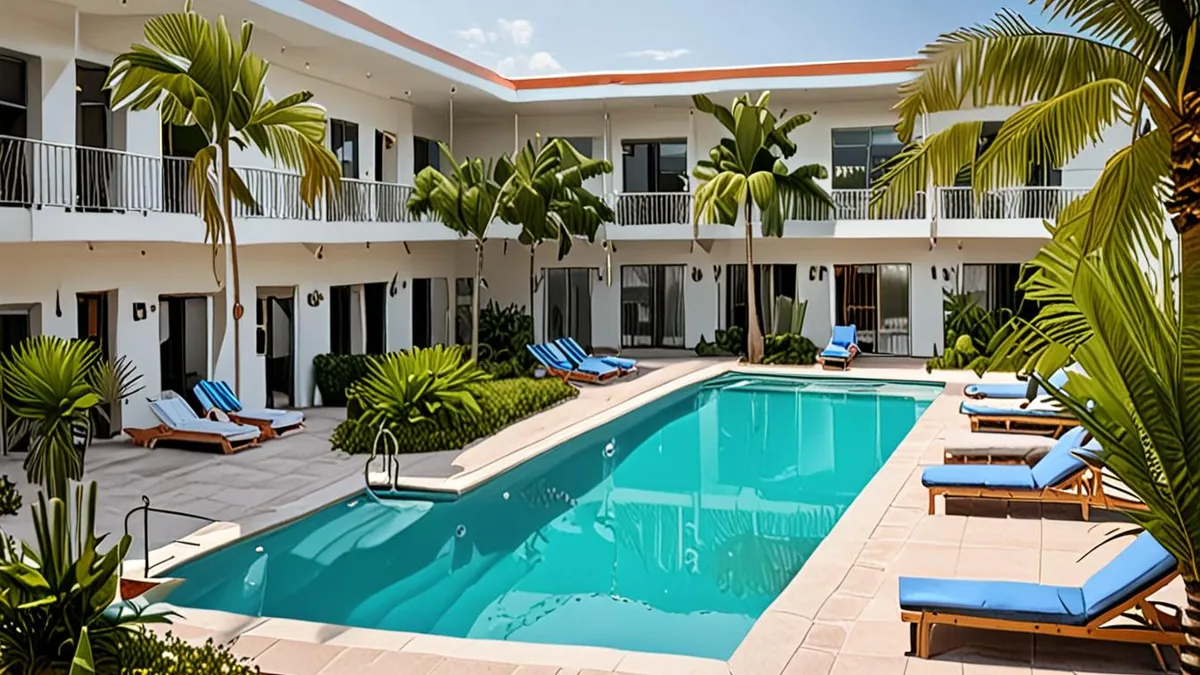
Step up to 4 stars and the pool scene changes noticeably. A second pool or a dedicated kids’ pool is common at this level, which means families and adults looking for calm water can finally separate instead of sharing one basin. The main pool is usually larger than what you’d find at a 3-star property, and the deck layout tends to be planned rather than improvised, with defined zones for swimming, wading and lounging.
Service on the deck is the real marker of this tier. A poolside snack bar appears, often serving burgers, salads and drinks through the afternoon, and at many 4-star resorts you’ll find waiter service on the deck itself, so you can order from your lounger without packing up your belongings. Heated pools and hot tubs also become more reliable inclusions here, which matters if you’re traveling in cooler months or want an evening soak after a day in the sun.
Wellness touches start showing up at this tier too, since spa and fitness facilities typically enter the picture from 4 stars upward. That often means a small treatment room or sauna a short walk from the pool deck, handy when you want to alternate swimming with a massage or a quiet rest hour. Before booking, it pays to look at the resort’s pool photos and map to confirm the second pool actually suits your group’s needs.
- Kids’ pools are usually shallow and shaded. Expect depths designed for wading rather than swimming, often with splash features, placed within sightline of the main loungers so parents can supervise easily.
- Snack bar hours matter for families. Many open from late morning through late afternoon, covering lunch and the post-swim snack window without a sit-down meal.
- Hot tubs often sit near the main pool but not always. Some resorts tuck them into a quieter corner of the deck, which is worth locating on the resort map on day one if evening soaks are part of your plan.
Resort Pools at 5-Star Properties
At the top of the rating scale, pools stop being a single rectangle of water and become a whole landscape. Five-star resorts typically feature infinity pools that blend into the ocean horizon, swim-up bars where you can order a cocktail without leaving the water, and several separate pool zones so families and adults looking for quiet are not competing for the same deck space. Expect at least one shallow, playful area for kids and one calm, adults-only pool.
Cabanas are the signature upgrade at this level. These shaded, curtained daybeds line the pool deck and usually come with a dedicated attendant who handles food orders, drink refills and sunscreen requests. Rental rates vary widely by destination and season, but at many five-star properties they often run $50–$200 per day. If a cabana is on your must-have list, ask the resort in advance whether they can be reserved before arrival, since the best-shaded ones go first.
The service layer is what really separates five stars from everything below. Rather than walking to a bar, you will notice staff coming to you.
- Poolside concierge: a staff member stationed on the deck who can book dinner reservations, spa slots and excursions without you leaving your lounger.
- Chilled towels and cold water: offered periodically through the day, along with spritzes of cooling mist in hot climates.
- Premium loungers: wide padded daybeds, often with adjustable backs and side tables, spaced generously so you are never packed shoulder to shoulder.
- Attendant service at the lounger: many properties assign specific staff to a pool zone, so the same person learns your usual order by day two.
Beyond the Pool: Dining, Spas and Activities by Star Level
The pool gets the photos, but the rest of the amenity package is where star ratings really show their logic. Each step up the scale adds venues, staff and structured programming, and knowing the typical pattern helps you judge whether a resort’s photos match its rating.
At three-star properties, dining is usually functional rather than varied. Expect one buffet restaurant covering breakfast, lunch and dinner, sometimes with a small snack counter. Evening entertainment tends to be limited to occasional live music or a themed night rather than a nightly schedule. This works well if you plan to eat out often, but less well if you want to stay on site every night.
Four-star resorts expand the offering noticeably. Two to three dining venues are typical, often a buffet plus one or two à la carte restaurants, alongside a small spa or a basic fitness room. A daily activity program appears at this level too, with things like aqua aerobics, beach volleyball or evening shows posted on a board each morning.
Five-star properties treat amenities as the core product. Three to five restaurants covering different cuisines, a full-service spa with treatment rooms and often a thermal area, supervised kids’ clubs and a water sports desk for kayaks, snorkeling gear or sailing trips are all standard inclusions.
- À la carte reservations: at five-star resorts, specialty restaurants often require booking a day or two ahead, so plan your evenings at check-in.
- Spa thermal areas: full-service spas frequently include saunas, steam rooms and hydrotherapy circuits that guests can use without booking a treatment.
- Kids’ club hours: supervised clubs at five-star properties typically run structured sessions through the day, which is a real difference from the informal play corners at lower ratings.
- Water sports equipment: desks at higher-rated resorts usually include non-motorized gear in the stay, while motorized options cost extra.
Matching Star Level to Your Trip and Budget
The right star level depends less on luxury and more on who is traveling and when. A five-star resort is not automatically the better choice for every trip, and paying for amenities you will never use is the most common booking mistake we see.
Families and couples have different sweet spots
Families with young children often get the best value at four stars. That is the level where a dedicated kids’ pool becomes a reliable inclusion, and where daily activities keep children occupied without the premium price of a five-star kids’ club. If your children spend all day in the water anyway, an infinity pool adds little compared with a shallow, safe splash zone.
Couples who want quiet pool time should aim higher. Five-star properties commonly separate their pools into adult-oriented zones and family zones, so you can settle into a calm area with waiter service and not hear a single cannonball. At lower ratings, one shared pool means everyone shares the same atmosphere.
Timing matters as much as rating
Peak season changes the math. In Caribbean destinations, pool crowds are heaviest December through March, and lower-star properties feel the squeeze first because their decks are smaller. A three-star pool can go from comfortable to packed in a single week of school holidays. Before booking any property for those months, check the total deck and lounger space in photos and reviews, not just the pool itself. A slightly larger four-star deck may feel roomier than a cramped five-star one at full occupancy.
Choosing Your Star Level With Confidence
If you’ve ever paid for a 5-star stay and a 3-star stay back to back, the difference can feel confusing rather than obvious. The pattern is simpler than it looks: star ratings mainly track pool size, dining count and service extras. A 3-star property covers the basics with one main pool and a single restaurant, a 4-star adds family facilities like kids’ pools and extra dining venues, and a 5-star layers on luxury touches such as infinity pools, swim-up bars and rentable cabanas.
So the real question isn’t which rating is best, but which amenity level matches who is traveling and when. Families, couples and peak-season swimmers all need different things from a pool deck. Match the star level to your trip, and the price difference starts to make sense. If this helped you compare your options, leave a comment or share the article with a fellow traveler.