Listing phrases like “plunge pool” or “heated pool” can mean very different things, and travelers often discover the truth only after arrival. That gorgeous “infinity pool” might be two meters wide, and the “heated” water may sit well below swimming temperature in spring. Villa pool descriptions are written to attract clicks, not to give you precise facts, so it pays to know what each term actually implies and which questions to ask before you pay a deposit.
This guide breaks down the most common pool wording in villa listings, the exact numbers to request from hosts, and how to judge photos, placement and privacy. We also cover the maintenance and safety questions worth sending in advance, how pool extras like heating show up in the final price, and how to match the pool to your trip type, whether you are honeymooning, traveling with kids or working remotely.
Common Villa Pool Descriptions and What Each Term Really Means
Pool wording in rental listings is loosely used, and two villas advertising the same feature can offer completely different experiences. One “private pool” might be a tiny tiled square wedged against a fence, while another is a generous swimming pool surrounded by your own terrace. The biggest divide is between pools that are truly yours and pools you share with strangers, so start there before you get distracted by pretty edge designs or glossy photos.
A genuinely private pool should be exclusive to your unit, with no other guests or owners dipping in. A shared pool means exactly what it sounds like: other people swim in the same water, which is common at properties with around 4 to 10 units. Neither option is wrong, but they suit different trips. If you booked a villa specifically for pool privacy and arrive to find neighbors doing laps beside you, your whole trip changes character. Shared pools can still work well for families or social travelers, and they often come with better facilities, but you should know what you are signing up for before paying. If a listing only says “private pool” without dimensions or details, send the host a direct question.
Then come the descriptive terms, each of which tells you something specific about size or design:
- Plunge pool: typically under 3 meters wide and under 1.5 meters deep. It is fine for cooling off with a drink in hand, but there is no room to swim any real distance.
- Infinity pool: this describes the edge design, where water flows over one side for a visual effect. It says nothing about size, so a small infinity pool can still be tiny.
- Lap pool: usually 10-15 meters long and 1.2-1.5 meters deep. This is the only type genuinely suitable for actual swimming rather than floating.
- Shared pool: expect other guests around it, so morning quiet and free loungers are not guaranteed. Check how many units share it before booking.
Once you understand these terms, you can read listings faster and spot the ones that actually match what you pictured for your trip.
Pool Size, Depth and Heating: Numbers to Ask For
Once you know what type of pool you are looking at, the next step is getting real numbers. Ask the host for exact dimensions in meters, including length, width and depth. Vague answers like “good size” or “plenty big” are a red flag, because a host who knows the pool is generous will happily give figures.
Temperature and heating costs
Heated pools generally hold 26-29°C, which is comfortable for daily swimming. Unheated outdoor pools in the Mediterranean drop below 20°C outside May-September, which most adults find bracing at best. If you are planning a spring or autumn trip, when to book a villa in the Mediterranean matters as much as whether the pool is heated, since the two go hand in hand.
Also confirm whether heating is included in the rate or priced separately. It is often an add-on of $15-50 per day, which can meaningfully change your budget over a two-week stay. Get this in writing before you book, not in a message after arrival.
Depth for families
Check depth carefully if children are in your group. Many villa pools are 1.5 meters or deeper throughout, with no shallow shelf for kids to stand in. A deep, beautiful pool can be unusable for young swimmers, so ask directly whether there is a shallow end or steps with a low first step.
Photos, Placement and Privacy Around the Pool
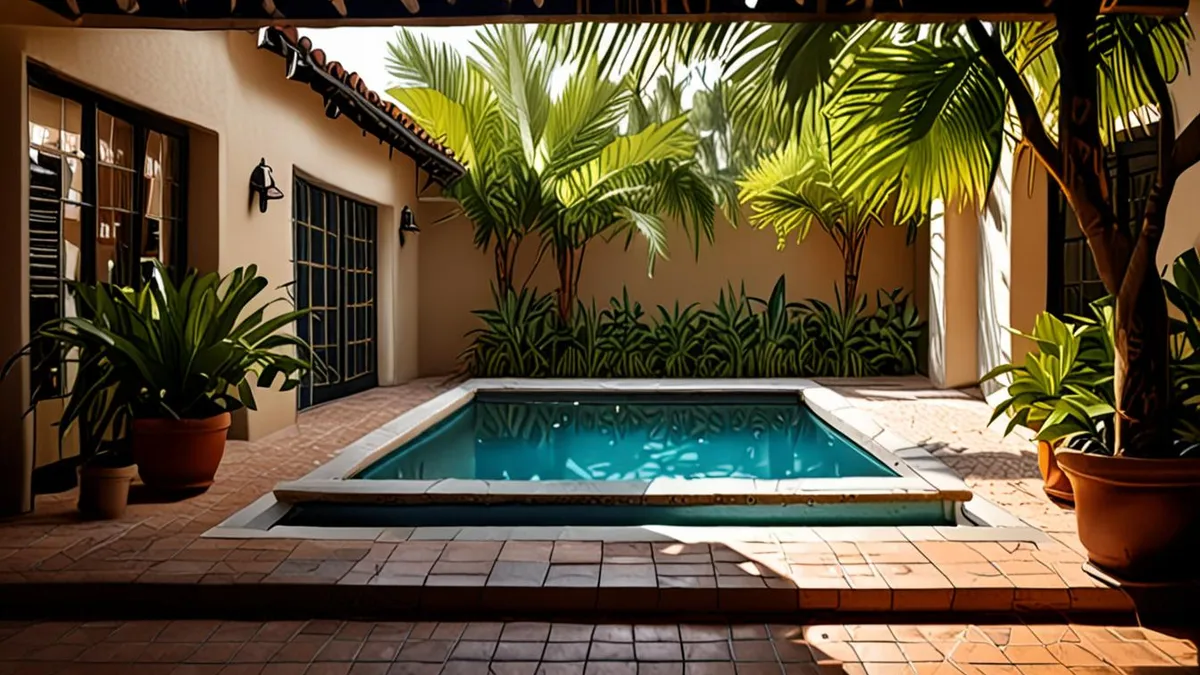
Listing photos are usually chosen to flatter the property, and pool shots are the most edited of all. A single wide-angle image can make a small pool look spacious and hide the apartment block next door, so do not rely on the gallery alone.
Request 2-3 recent photos of the pool area before booking, ideally taken from different angles and in the current season. Ask specifically whether anything has changed since the listing photos were taken, since furniture, planting and neighboring construction all shift over time.
Placement, privacy and shade
Check which way the pool faces in relation to the villa itself. If it sits directly below bedroom or terrace windows, overlooking windows reduce privacy for everyone, and you may feel watched while swimming. Ask whether neighboring properties can see into the pool area, and look for villas with planting, walls or level changes that shield it. For a deeper look at this, see which villa locations give you the most privacy.
Shade matters more than most travelers expect. An unshaded pool in the tropics can be too hot to use at midday, and the surrounding deck can be worse. Ask whether umbrellas, pergolas or trees cover part of the pool area so you have a comfortable option during peak sun.
Finally, if children are in your group, confirm the pool area is enclosed or fenced, ideally with a self-closing gate. Ask whether the fence is permanent or removable, because a decorative low wall is not the same thing as a proper barrier.
Maintenance, Cleaning and Safety Questions to Send the Host
A pool that looks sparkling in photos can still be murky by day three of your stay if nobody is maintaining it. Before you book, ask the host directly how often the pool is cleaned and whether a maintenance visit will happen during your stay. A well-run villa typically has a pool technician come once or twice a week, and you should know in advance when that visit falls so it doesn’t interrupt a morning swim.
Chemical balance matters just as much as cleaning. Confirm who handles the chemical checks, whether it’s the host, a local caretaker, or an outside pool company, and ask whether the pool is saltwater or chlorine. Saltwater pools feel softer on skin and eyes, which some guests with sensitive skin prefer, but both types are fine when properly managed.
Safety and house rules are easy to forget until you arrive with kids in tow. Cover these points in your first message to the host:
- Children’s rules: ask whether children are allowed to use the pool unsupervised and whether any depth restrictions apply.
- Hours of use: some villas restrict swimming at night, which matters if you enjoy a late dip.
- Covers and alarms: ask whether a pool cover, fence, or alarm is provided, especially for toddlers.
- Last service date: request the date of the most recent maintenance visit so you know the water was checked shortly before your arrival.
Hosts who answer these questions quickly and specifically are usually the ones whose pools are genuinely well looked after. Vague or evasive answers are a signal to look elsewhere.
How Pool Extras Show Up in Rental Fees
The nightly rate rarely tells the whole story. The most common surprise is pool heating: some hosts include it in the rate, others bill it as a separate daily charge, and a few only offer it as an optional extra you must request in advance. If you’re traveling outside the warmest months, ask about heating before booking rather than after arrival, and get the answer in writing so there’s no dispute at checkout.
Maintenance costs can also hide in the fee breakdown. Some listings fold pool cleaning and chemical checks into a cleaning fee or service fee, while others charge these separately at checkout. Read the itemized fees carefully so you know whether pool upkeep is already covered or will appear as an extra line on your final bill. Our guide to what villa rental fees include and how to avoid surprises breaks down the typical charges in more detail.
Pool Towels and Small Extras
Towels are another detail worth clarifying. Some villas provide dedicated pool towels and refresh them daily as part of the housekeeping service, while others expect you to use your bath towels by the water or charge for extra sets. A quick question to the host settles it in one message.
It’s also worth checking whether pool access carries any rules that affect your budget, such as restrictions on hours of use or limits on how many guests can swim at once. None of these extras is unreasonable on its own, but together they can add a noticeable amount to a week-long stay. Getting the full picture before you pay the deposit is the simplest way to keep your budget intact and avoid awkward conversations at checkout.
Matching the Pool to Your Trip Type
The right pool depends less on the listing photos and more on how you actually spend your days. A pool that delights a honeymooning couple can frustrate a family of eight, so match the setup to your trip before you book.
Couples and Honeymooners
If your trip is about time together, prioritize a small private plunge or infinity pool attached to a secluded terrace. You don’t need meters of swimming space; you need privacy, a comfortable spot to lounge, and water you can slip into whenever the mood strikes. Check that the terrace isn’t overlooked by neighboring buildings or other units.
Groups, Families and Remote Workers
Multi-family groups should look for larger pools, ideally 10 meters or longer, so everyone can swim and play without feeling crowded. Shallow areas for kids are just as important, since many villa pools are uniformly deep and unsuitable for young children. Remote workers have a different priority: a pool close to a shaded outdoor workspace. A pool across the property means a walk every time you take a break, while one a few steps from your desk makes midday dips part of the routine.
Surf and beach trips are the exception. If you’ll spend most of your days in the ocean, a compact plunge pool is usually enough to rinse off and cool down in the evening, and choosing one over a large pool can save real money on the nightly rate.
Wrapping Up: Reading Pool Listings With Confidence
Villa pool listings often sound better than they read. Words like plunge pool, heated pool or private pool can describe very different realities, and many travelers only discover the truth when they arrive and find a tiny basin instead of a swimming spot. The fix is simple: learn what each term actually means before you book.
Decoding terms like plunge, lap, infinity and shared pools sets realistic expectations before you commit. Asking for exact dimensions, heating costs and recent photos prevents most pool disappointments. And matching pool size and privacy to your trip type turns a listing detail into a real trip highlight. If this guide helped you read between the lines, share it with a fellow traveler or leave a comment below.